Condo inspection: the buyer's inspector and the association's inspections are two different things
A pre-purchase inspection looks at one unit. The association inspects the building all year. What each one covers, and how a buyer gets to see both.
By Condo Inspection Team
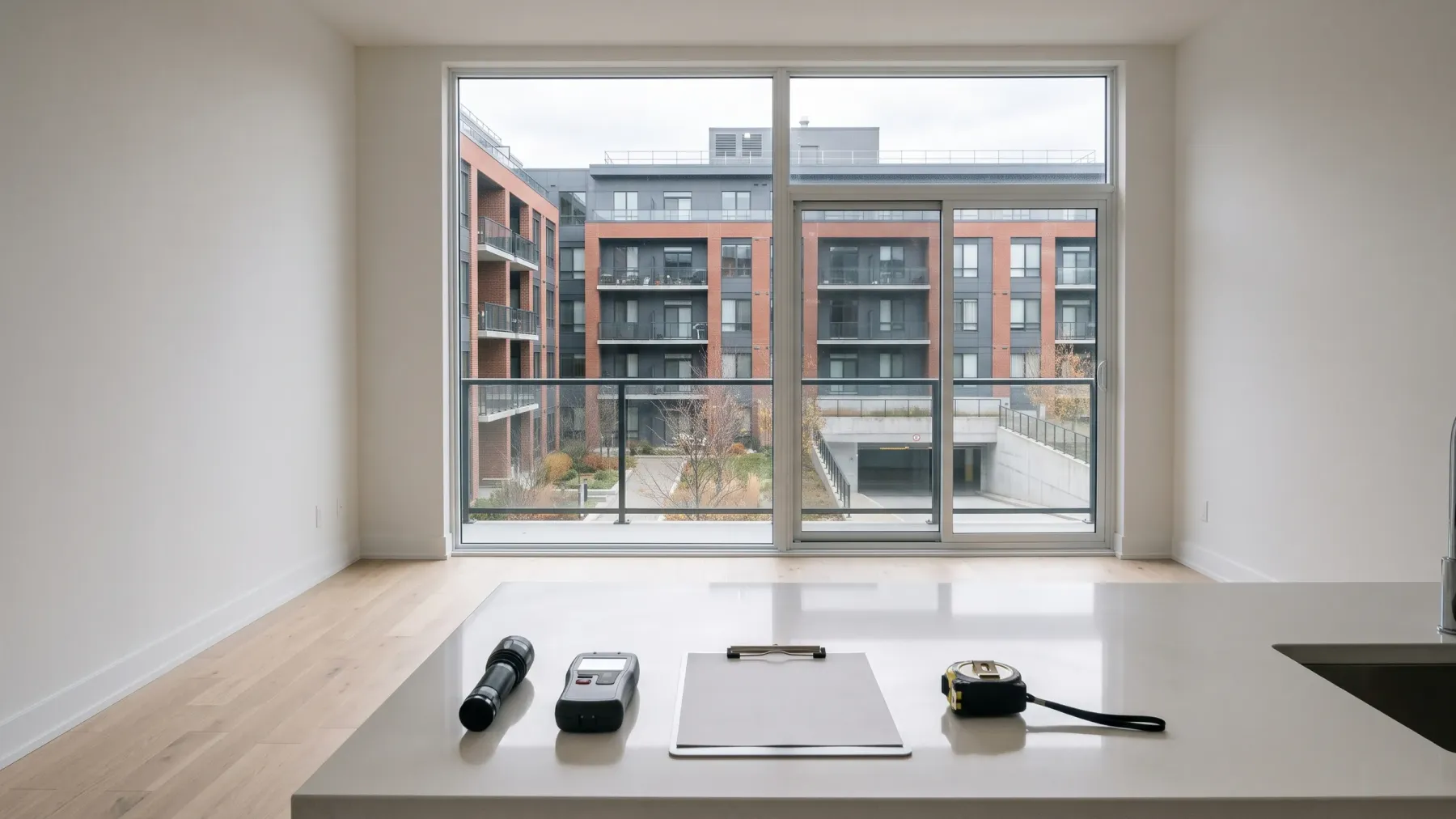
"Condo inspection" means two different things. For someone buying a unit, it is the visit by a building inspector they hire before the sale closes. For the people who run the building, it is the inspections the association carries out all year on the roof, the garage, the mechanical rooms and the rest of what the owners share.
The two rarely meet, and the gap between them is where buyers get surprised. The buyer's inspector sees one unit, on one visit. The association's inspections see the whole building over years, but the buyer has to ask for them.
This article explains both, for buyers and for the boards and managers whose records those buyers will ask about. A word first on who we are: Condo Inspection is software that associations and management companies use for the second kind of inspection. We do not inspect units and we do not recommend inspectors.
A word on names. "Association" here means the HOA or condo association, called a condo corporation in most of Canada and a strata corporation in British Columbia: the body the owners form to run the building.
The buyer's inspection: one unit, one visit
The buyer hires it, usually once an offer has been accepted, and often makes the sale conditional on it. The inspector works for the buyer, and the report goes to the buyer.
What it covers is set by the inspector's contract and by the standard of practice they follow, so ask for both in writing before the visit. In a condo, the inspection usually looks at what belongs to the unit:
- Signs of water: stains, swelling, mould, damp under sinks and around the tub, the dishwasher and the washer.
- Plumbing fixtures, visible pipes and the water heater, if the unit has its own.
- The unit's electrical panel, outlets and switches.
- Heating, ventilation and air conditioning equipment that serves the unit alone.
- Windows, doors, floors, walls and ceilings inside the unit.
- The balcony or terrace the unit uses, as far as it can be seen.
What it usually cannot see
Some inspectors also walk the hallways, the garage or the mechanical room if someone lets them in. Even then, it is a visual look on one day, and most of what decides the cost of owning a condo sits outside the unit:
- The roof, the walls and the windows of the building as a whole. A leak that shows up in another unit three floors up is the same building.
- The garage: the slab, the drains, the ventilation, the membrane.
- The shared systems: the boiler or central plant, the elevators, the fire alarm and sprinklers, the generator.
- The history. One visit cannot tell you whether the water stain by the garage door has been there for ten winters, or whether the roof was replaced last year or is due next year.
- The money. No inspector can tell you how much is in the reserve fund, what work is planned, or whether a special assessment is coming.
None of that is a failing of the inspector. It is outside what they were hired to look at.
Who may do it
The rules for who may call themselves a home or building inspector vary by province and state. Some require a licence and some do not, so check with the regulator where the unit is.
In Quebec, since October 1, 2024, the Régie du bâtiment du Québec (RBQ) has issued certificates to residential building inspectors who do pre-purchase inspections. The certificate becomes mandatory for every inspector practising in Quebec on October 1, 2027, and the RBQ keeps a public register to check one. Its pre-purchase inspection page links to the register.
The association's inspections: the whole building, all year
The inspections that see the roof and the garage belong to the association. In a well-run building they come in several layers:
- Walk-throughs by the superintendent, the manager or a board member: the common areas, the roof drains, the garage, the exterior, often by season. Our winter checklist is an example of one.
- Inspections and tests of the building's systems by the contractors who service them: fire alarm, sprinklers, elevators, boilers, the generator. Their intervals are set by the codes and authorities where the building is.
- Studies by professionals: an engineer's report on the facade or the garage, and the reserve study (a reserve fund study in most of Canada, a depreciation report in British Columbia), which lists the building's components with their expected life and replacement cost.
- In Quebec, the maintenance log (carnet d'entretien), which the law now requires: the building's technical record, with its components, their maintenance, the inspection reports and expert opinions, and the major repairs and replacements planned over at least the next 25 years. Existing associations have until August 15, 2028 to obtain one, or a new one if theirs dates from before August 14, 2023, so an existing building may not have a current log yet. Our Bill 16 article covers who prepares it and by when.
Each layer leaves a record: a report, photos, a finding, and the repair that followed or did not. Together they are the building's history, and that history is what the buyer's inspector cannot see.
How a buyer gets to see the building's side
Most places give a buyer a way to see part of that record before committing, through a document the association prepares for a sale. Its name and contents come from the local law: a status certificate in Ontario, a Form B information certificate in British Columbia, a resale or estoppel certificate in many US states.
In Quebec, it is the association's certificate on the state of the building. Since August 14, 2025, a regulation sets what it must contain, including:
- the inspections performed and the expert opinions obtained at the association's initiative in the last five years on the general condition of the building or one of its major components;
- the losses of the last five years that affected the unit or the common portions;
- the major repairs and replacements done in the common portions in the last five years, and those planned for the next ten, with their dates and costs (estimated, for the planned work);
- the contingency fund (Quebec's reserve fund) against what its study recommends.
The regulation requires no attachments, but the Société d'habitation du Québec recommends adding the latest maintenance log and contingency fund study. A buyer who has signed a promise to purchase can also ask the association directly for documents about the building, at the buyer's cost. Our article on the association's certificate goes through it item by item.
Wherever the unit is, a buyer can ask questions that only the association's records can answer:
- When was the roof last inspected, by whom, and what did they find?
- What did the last inspection of the garage find, and was it repaired?
- When was the reserve study done, and is the fund where it says it should be?
- What major work is planned in the next five or ten years?
- Has water damage come back in the same place?
Bring the answers to your own inspector, your notary or lawyer, and your real estate broker or agent. Together with the unit inspection, they give the whole picture.
For boards and managers: the buyer's questions land on you
Every sale sends those questions to the board or the manager, often on a deadline: 15 days for the certificate in Quebec. A building that records its inspections as they happen answers them from what it already has. One that does not starts searching inboxes.
In Condo Inspection:
- The items to check are set once for each type of asset, so every inspection of the roof drains or the garage follows the same list, whoever does it.
- Photos and video attach to the visit or to the asset itself, and an image can be annotated to show the crack.
- Repairs are tracked as interventions, separate from inspections, so "we inspected it" and "we fixed it" never get confused in the record.
- When an inspection is canceled or postponed, the reason stays in the history.
- Recurring inspections generate their own schedule.
- Reports come out of that data with your logo, as PDF, Excel or Word: the asset maintenance and inspections report, the maintenance log report, and in Quebec the association's certificate. A buyer who has no account can receive a document through a secure public link.
The inspections page covers checklists, photos and recurring inspections, and the reports page covers what comes out of them. Or book a demo and ask how a building's record gets ready for its next sale.
Sources
- Régie du bâtiment du Québec, Pre-purchase inspection: inspector certificates since October 1, 2024, mandatory from October 1, 2027, and the register.
- Regulation establishing various rules concerning divided co-ownership, O.C. 991-2025, section 10, Gazette officielle du Québec, July 30, 2025: the contents of the certificate.
- Civil Code of Québec, articles 1068.1 and 1068.2, enacted by S.Q. 2019, chapter 28: the 15 days, and the buyer's request for documents.
- Société d'habitation du Québec, explanatory guide to the regulation (in French): the recommended attachments and the August 15, 2028 deadline for the maintenance log.
This article is general information, not legal advice. For a purchase, talk to your notary or lawyer.